
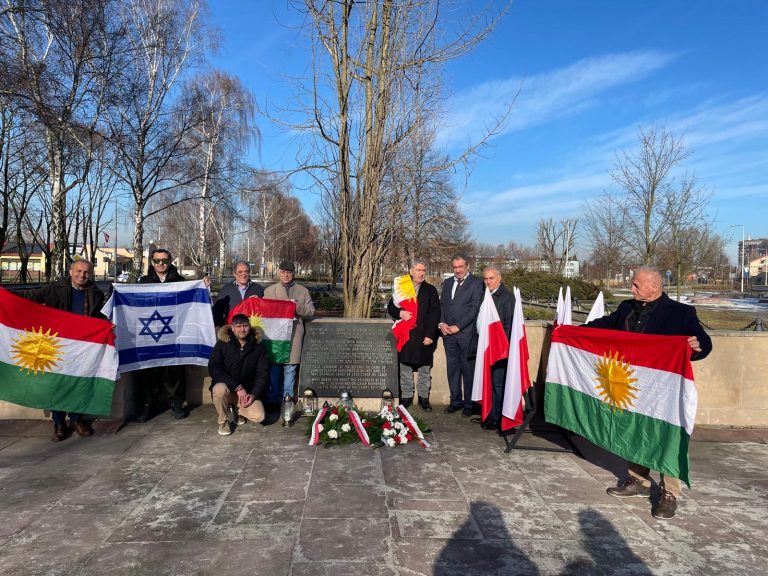
Sherzad MamSani
President of the Israel–Kurdistan Alliance Network
EastMed Contributor
April does not pass quietly.
It rises—from mass graves, from ashes, from the silence of destroyed villages—to confront humanity with a question it still refuses to answer:
Why does evil repeat itself—despite everything we claim to have learned?
April 14: Anfal and the Memory of Erasure
On April 14, the Kurdish people commemorate the victims of the Anfal Campaign (1987–1988), carried out under the regime of Saddam Hussein.
More than 180,000 Kurds were killed.
Over 4,000 villages were erased.
Entire communities vanished from the map of the Kurdistan Region of Iraq—from Erbil to Duhok, from Sulaymaniyah to Kirkuk.
As documented by Human Rights Watch:
(The Anfal campaign was a genocidal campaign against the Kurdish people.)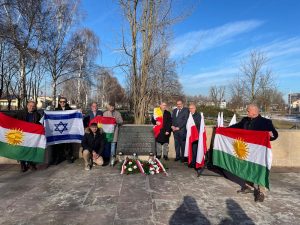
And as many reports observed:
(Entire villages were erased from existence.)
This was not collateral damage.
It was design.
April 14, 2026: When Anfal Meets Yom HaShoah
In 2026, this same date coincided with Yom HaShoah—the remembrance of the The Holocaust.
Between 1941 and 1945, approximately six million Jews were systematically murdered.
Holocaust survivor Elie Wiesel wrote:
(The opposite of love is not hate, it is indifference.)
And in his testimony:
(Never shall I forget that night.)
Indifference—more than hatred—allowed the machinery of death to function.
April 24: The Armenian Catastrophe
On April 24, the world marks the beginning of the Armenian Genocide.
In 1915, following arrests in Constantinople (Istanbul), between 1 and 1.5 million Armenians were killed through deportations, starvation, and death marches toward Deir ez-Zor.
A chilling warning, attributed to Adolf Hitler, still echoes: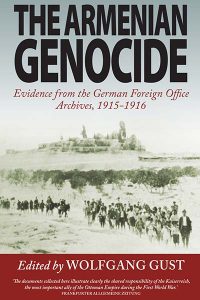
(Who, after all, speaks today of the annihilation of the Armenians?)
History answered—by repeating the crime.
The Pontic Greeks: A Forgotten Chapter
Between 1914 and 1923, the Pontian Greek Genocide unfolded along the Black Sea.
An estimated 300,000 to 350,000 Pontic Greeks were killed.
According to the International Association of Genocide Scholars:
(The fate of the Pontic Greeks was part of a broader policy of ethnic cleansing.)
Forgotten—not because it was less severe,
but because memory itself can be selective.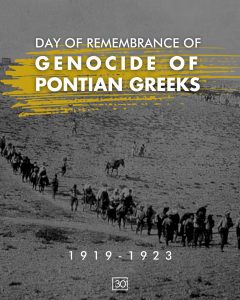
The Kurdish Condition: Not One Genocide, But Many
The Kurdish story does not belong to a single date.
From the Dersim Massacre (1937–1938) in Kurdish regions of Turkey, where tens of thousands were killed,
(The Dersim operation resulted in mass killing and deportation.)
to Halabja (March 16, 1988), where 5,000 civilians died within hours,
to continuous repression following the Iranian Revolution in cities like Sanandaj and Mahabad—
As noted by Amnesty International:
(Ethnic minorities, including Kurds, have faced systematic repression.)
This is not a memory frozen in history.
It is a repeated reality.
Not Separate Tragedies—But a System
These genocides are not isolated.
They are variations of the same logic:
* Define a people as other
* Strip them of legitimacy
* Justify violence
* Silence the witnesses
Genocide does not begin with weapons.
It begins with words.
Between Survival and Dignity
And yet, despite everything,
these peoples did not become reflections of their oppressors.
* Armenians preserved identity
* Jews rebuilt life
* Kurds continue to demand one fundamental right:
To live with dignity on their ancestral land
The Failure of (Never Again)
After the Holocaust, the world promised:
(Never again.)
But history did not end.
It adapted.
April returns each year,
not only as remembrance—
but as an accusation.
A Question Still Open
Genocide is not only a crime of the past.
It is a failure of the present.
And so the question remains:
Will humanity finally break this pattern—
or will April continue to return,
carrying the names of those we failed to protect?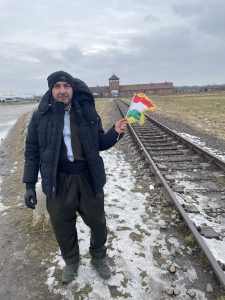
References
* United Nations (1948) – Genocide Convention
* Human Rights Watch (1993) – Anfal Campaign
* Yad Vashem
* United States Holocaust Memorial Museum
* International Association of Genocide Scholars
* Amnesty International
* McDowall – A Modern History of the Kurds
* Dadrian – The Armenian Genocide
* Browning – The Origins of the Final Solution
PRESS THE LINK BELOW TO HEAR THE ARTICLE ON VIDEO